
About Me

Hello. My name is David Lewis. I’ve been an independent life insurance agent since 2004. During that time, I’ve worked with some of the oldest and most respected life insurance companies in the United States.
I know the good, the bad, and the downright ugly of this industry. My method of policy design and insurance planning is uncommon, but the results speak for themselves.
… but don’t take my word for it. Read over my website, join my email list, think about what I write and my arguments for doing things “The Rogue Agent” way and…
… judge for yourself.
My professional bio (for Anyone who cares)
David C. Lewis is a licensed independent life insurance agent (License No./NPN: 8462895), author, investor, and owner of Monegenix® and The Rogue Agent website.
His articles and essays on life insurance and Human Life Value have been taught at California State University (CSU) as part of its Expository Writing and Reading Course, and his articles on budgeting, life insurance, investing, and financial planning have been featured in online publications like ThinkAdvisor, The Huffington Post, NuWire Investor, and RealClearMarkets. David is also the author of the best-selling book The 10-Minute Budget, Business Economizer, as well as numerous articles about life insurance, budgeting, and saving money.
Here’s My Personal Story (If you’re Curious, and I don’t Blame You If You’re Not)
Some people want to know more about me, personally. Let me assure you, my life isn’t worth writing a book about, and not at all necessary if you want to learn about (and benefit from) my method of insurance-based financial planning. So, I will understand if you have zero interest in my personal story… and in fact, would recommend most people just skip this section entirely. Seriously. You aren’t missing much.
But, for those who just have to know (for whatever reason), here’s my personal story:
My name is David Lewis, and I’m a licensed independent life insurance agent and advisor. I started in financial services in 2004 and haven’t looked back. Today, I live and work in a small town in North Carolina, called Kenly.
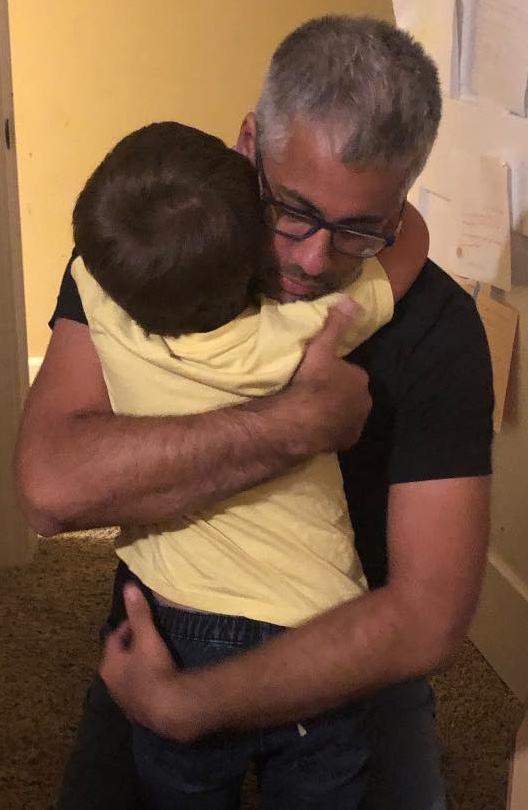
It’s just me and my son…
My lovely wife…
… and my (mostly) faithful dog


I started in the insurance business in 2004 as a life insurance agent and registered representative… worked in the Elmira, New York branch of the world-famous Metropolitan Life Insurance Company…

Today, MetLife is no longer in the life insurance biz. So, I guess, at least in my case, it really is true: I can’t go home again.
What’s All This “Rogue Agent” Stuff About?
I’m glad you asked (even if you didn’t)…
This whole thing sorta started out as a joke of sorts, and then got way, way, too serious until it stuck and now I can’t get it off of me.
Way back when, my wife and I would endlessly joke about who was more of a rebel—me or her. My opinion about this is… she was a born rebel. Contrarian to the core. It’s in her bones. In fact, if you look up the definition of the word in the dictionary, you will see a photo of her in there. Anyway, one day we were “arguing” over who was more of a rebel… and she insisted that it was me. See? She even argues with me about who is more rebellious…
So anyway, here’s the story:
I was a very shy and introverted child until about the 8th or 9th grade. Being shy caused me a lot of trouble. Was constantly bullied and teased. Didn’t play sports. Didn’t have a lot of friends. That all changed in junior high, and about 2 years into high school, one of my teachers told me that I’d really “come out of my shell”. I had made friends with one of the high school wrestlers, who I had met through his brother who also became a very good friend of mine (I never wrestled or played any sports of any kind — I was a shy, scrawny kid with almost zero friends before then), and he took me under his wing, protected me from the jocks who all wanted to beat me up, and eventually became my best friend. In some ways, he saved my life at a time when I really needed it.
I think that gave me a lot of confidence.
Maybe too much confidence.
Mom and dad noticed the changes, too. Would always tell me I was “very opinionated” and “so honest”, which I eventually figured out meant I was “too opinionated” and “too candid” about those opinions.
I don’t recall exactly how it came about, but at some point, my friends and I got fed up with all the B.S. and politics in high school, and decided we should start our own underground school newspaper which we called The Jester’s Court. Actually, it was a friend of mine who was the genesis for this little project, and he more or less roped us all into it (not that we objected). We immediately went to work hatching a scheme for how we would get supplies, how we would print and distribute the paper. We even came up with merch that we would wear when passing out the newsletters. Became kind of a code. Teachers didn’t really “get it”, but the students did and so whenever they saw us with our shirts on, they knew it was time for another edition. The whole thing was not exactly legal, but also not technically illegal either. Just… not in line with the school’s administrative rules or policy. But, the way we figured it, our school newspaper sucked and we wanted to print the truth (as we saw it, naturally).
The paper was essentially satire, often mocking the school administration and the superintendent (mercilessly) and some of the teachers we didn’t like. But also reporting on the stories behind the official stories being published in the official, administration-approved, school newspaper. So, we might publish pieces on the school sporting events, commentary on what the lunch ladies were really putting in our food, some rumor about some teacher going around or whatever. You know… scandalous stuff. You have to remember, we were publishing this at a time when Jerry Springer and Howard Stern were in their prime. So… there was definitely some influence there. One of our favorite things to do was mock the school administration.
They were the Ministry of Truth. We were the uncircumcised truth.
Back then, the way it worked was you had to get permission to publish a newsletter and distribute it to the student body. We quickly realized we were never going to get permission, so we never asked. Figured it was better to ask for forgiveness afterwards than to ask for permission beforehand (and risk being told “no”). Plus, the way we saw it, we were just goofing around and having fun.
Anyway, because we weren’t authorized to publish our newsletter, we became a legitimate (or rather, illegitimate?) underground school newsletter. We did buy our own paper, but we also used the school’s computer lab, printers, and other resources without asking. Made up our own t-shirts to covertly advertise the newsletter, and distributed it by simply handing it out to students in the hallway before class.
Everything eventually came crashing down on us when one of the newsletter’s contributors had the bright idea of creating a fake hall pass that any student could use. He scanned an intentionally blurred (and obviously phony) copy of the superintendent’s signature onto the pass to make it look “authentic”. Then, he made many copies of the fake hall pass and we attached it to what would become the last issue of the newsletter.
We had a rule that these newsletters were not to be distributed to anyone in junior high. Well… someone in junior high somehow got their hot little hands on an issue and used the hall pass, got caught, and then turned state’s on us. We all believed we were protected by the 1st Amendment, freedom of speech. Turns out, you have no 1st Amendment rights in a public school, and besides… “forging” the superintendent’s signature on a bogus hall pass doesn’t constitute “freedom of speech”. The charges against us were pretty serious. They threatened us with suspension, expulsion, holding us back from graduating… pretty much anything they could think of to “break” us.
But they never did break us.
From that point forward, it was all downhill for me. Or maybe it was uphill? An uphill battle against the external authorities of the world, against tradition, against mainstream… everything.
Fast forward 7 years of soul searching, learning, and experimenting with life.
The last place I expected to end up was in the stodgy world of finance——a breeding ground for top-down, mediocre, mainstream thinkers and “follow the leader” types. Pretty much everything except rebellious rogue thinkers. I first started working for MetLife because I was initially fascinated by the idea of life insurance and protecting people from harm, and inspired by an event that had happened a few years prior where some of my co-workers lost a buttload of money in the stock market (almost their entire retirement), and I was both horrified and fascinated by how this could possibly happen to such hardworking people. But I was also repelled by the suits, ties, and stuffy atmosphere of the office. Endless arbitrary rules. The theatre of it all, just to impress and intimidate clients. A lot of my peers seemed excited about the idea of being the responsible authority figure in their client’s life. I wasn’t. I wanted people to become financially independent. And, to me, that meant not being dependent on a financial advisor or insurance agent for their finances. Most of the financial services industry resists this idea, and their compensation models reflect that. Most advisors are paid based on how much money they can wrangle away from a client’s control and keep “under management”. Commissioned agents and advisors have their own problems, but at least they are not fighting to maintain control over a client’s money.
One of my first assignments at the Elmira office was to comb through massive binders (thousands of pages) and call on orphaned policyholders. An orphaned policyholder is someone who had an insurance agent at one time, but the agent either left the company or died. And so, no one was servicing the business. The policyholder likely hadn’t spoken to an agent in at least a year and probably several years. Some of the folks I spoke with hadn’t spoken with anyone from MetLife in over 10 years. A lot of the business I was looking at were old universal life policies. These were “current assumption” UL policies from the 1980s, 1990s, and a few from the early 2000s. Mostly the ’80s and ’90s. These universal life policies had been sold under the premise that the interest rates of that time (high single digit and double digit) would persist for decades. Very often, the policyholder had been told by the agent “Pay three, and you’re free!” or “Pay four, and no more!” Meaning… they were told they could make a few annual payments and then never have to pay another premium again.
Understandably, lots of policyholders loved that idea. The reality of it fell far short, and that’s why I was there. Most of the universal life policies I reviewed were underfunded by the time I arrived on the scene. Some could be saved by lowering the death benefit, but many could not and had to be replaced with another policy. Sometimes, the required premium to keep the policy in force was so high, it simply wasn’t worth it to the policyholder. So, I replaced the policy when I could and tried to help them out of a jam. Otherwise, I tried to fix the existing policy. You can imagine the number of angry policyholders I met. Many of them felt cheated by the idea that they were sold something that didn’t work out as planned. But, when we switched to a whole life policy, with guaranteed level premiums, I felt pretty good about assuring them that the same thing would never happen to them ever again so long as they kept paying the level premiums. Reason being, whole life insurance has guaranteed premiums, whereas universal life does not. In a UL policy, the carrier can change the internal expenses and interest credits. With whole life insurance, that’s never a risk the policyholder has to deal with. Had to set realistic expectations, of course, and also explain some insurance basics, but… the policyholders who stuck with it… everything worked out for them just fine.
However…
The company wasn’t completely happy with the way I was doing business. It’s not that they were mad about me fixing old policies or helping policyholders. But, they wanted me to bring in new business for variable annuities, more universal life policies (how the heck was I supposed to sell these folks new UL policies???), and sell a bunch of mutual funds — products that I wasn’t too confident about at that time. And, some of the planning tactics I saw… I wasn’t too comfortable with, either.
One case I remember: a 30-year veteran Certified Financial Planner (CFP) came with me on an appointment (at my boss’s insistence). This lady was in her mid 80s. I was told to “sit back” and let her (the CFP) handle things. The advisor proceeded to recommend a high premium universal life policy. Premium was about $10,000 per year. The total death benefit was going to be roughly $100,000. The lady was interested in buying a policy because she wanted to leave something for her daughter. But, how was she going to pay for this new policy? Easy. The CFP advised the lady to move her investments over to the firm, and the CFP would put that money into mutual funds that hypothetically paid 12% annual returns. Those returns would then be used to pay the premium on the policy. So, you see, the CFP got more money under management, plus a life insurance sale, which resulted in quite a lot of commissions, plus advisory fees.
“That’s how you do this business”, I was told.
But to me… it didn’t seem right. The universal life policy had a level death benefit. If the policyholder lived longer than 10 years, she would pay more into her policy than the policy was worth. Granted, she was already 84 years old, but still… seemed like we were gambling on her longevity. Not exactly the kind of case I would be proud to turn in if it were me. But, my boss ignored my concerns and insisted this CFP had been doing this for decades, and he trusted her judgment.
Another case: One of my co-workers (the boss’s son) was working a case where he had recommended a policyholder borrow against an existing policy to buy a new policy. So, I asked, “What happens when the loan interest comes due on this old policy?” And he says to me, “David, we’ll figure it out when it happens.”
Again and again, I saw this type of “planning” going on in the office. Most of the policyholders who went along with it didn’t have a clue about the long-term ramifications of what was being proposed to them by their so-called advisors.
I couldn’t do this. It’s not what I signed up for. I thought I would be helping people, and instead… I was being asked to make money by essentially any means necessary.
At one point, my boss saw I was struggling with a lot of these ideas. And so, he invited me to come with him on a client meeting. We took his fancy new Jaguar out to a large house in the country. Very fancy home, like something you’d see in a magazine. The couple were nice enough to us. His clients slid a $3,000 check across the kitchen table (back when that was still a lot of money), and he handed them a spiral-bound manuscript full of pie charts and numbers. On the way back to the office, I asked him about what just happened. And he proceeded to explain to me the idea of “financial planning” and that the way to make money in this business is to charge money for making written financial plans, then sell the clients the financial products they needed to implement the plan you just made for them.
Interesting.
But, back in the office, I kept pushing him for more information. Asking him if he followed his own advice. If he did the same thing with his money as he advised his clients to do with theirs. It was then that he confessed to me that while he put a little bit of money into the company’s 401(k) plan, most of his money went into dividend-paying whole life insurance.
Reason?
“It’s safe, I know exactly where my money is, and I sleep well at night.”
It suddenly dawned on me that his reasoning to me was the essence of a good financial plan. Again and again, when I dug deeper into what the advisors in the office were doing for themselves, it boiled down to a few basic things. Some of them bought mutual funds, but a lot of their own money went straight into whole life insurance or policies where variable interest could be swept into a guaranteed interest account and protected from downside risk. The real planning wasn’t about the pie charts, the numbers, the fancy investments, or any of that other nonsense I had learned. The insurance agent’s and even the financial planner’s plan were ones where they sleep well at night, and made them feel… at peace. It took financial uncertainty and turned it into certainty about the future. What’s weird is that they were doing something different than what they were recommending to their clients. And, publicly, they will insist that the stuff they secretly do for themselves is either impractical or isn’t really possible or is expensive or is a scam.
I’ve seen this again and again. I’ve even seen this among the financial bloggers back in the 2000s — the ones who initiated and spread the anti-whole life insurance campaign (back when finance blogs were very popular). One of those bloggers emailed me privately and told me flat out he would buy a whole life policy from me on the spot if I did the design the way I described in my writings and videos.
Anywho, back to my time at MetLife… Things really came to a head when I wanted to offer a life insurance product from another company (through an approved distribution channel we had at the company). My manager suggested I not do that and instead sell the company’s product. I believed (at that time) that the other product was going to be a better fit for the client. But… this didn’t seem to matter. I was supposed to be doing business a certain way.
Not my way.
The firm’s way.
When I believed a single product would solve the problem, and do it cost effectively, they expected me to be “comprehensive” in my approach and charge high fees for the advice. When I wanted to specialize in life insurance, they wanted me to be a “well rounded” financial planner. They didn’t want me “just selling life insurance”. They wanted me to sell investments, life insurance, annuities, more investments, and start making those fancy $3,000 financial plans for people… telling them what to do with their money, provide authoritative and good-sounding financial advice. To become a trusted advisor, dispensing saltine cracker advice, being the “responsible anchor” in my client’s lives (which usually meant giving them very generic financial advice, approved by the compliance department, holding their hand when my recommended investments tanked their savings, and then handing them a compliance-approved disclaimer stating that I wasn’t responsible if anything went sideways on them). And, if they were losing money, I would still be collecting my fees and commissions.
And… when I was “allowed” to sell life insurance, I was encouraged to sell “all base” premium —the highest commission rate possible. This was the way things were done… not just at my firm but at every firm. It’s still that way today. If you look at some of the largest carriers in the industry, excess premium over base premium only accounts for roughly 10-17% of the total premium. Meaning, most of the premium is base premium, paying the agent the highest possible commission rate. There are a couple of outliers where this is not the case, but it’s not the norm. The industry standard is to maximize commission for the agent at the expense of the policyholder.
That was (and still is) the mainstream way of doing things. That was the way everyone else did things at the firm.
Thing is, I didn’t want to do any of that.
And thus… The Rogue Agent was born. Partially born out of a joke my wife made at the time about me “going rogue”, but I guess you could say it was born out of the fires of my youth.
Ready to talk?
You can schedule a meeting with me here.